Wall-Mounted vs Stacked vs Rack Home Batteries: Which Fits Your Home?
Wall-mounted, stacked and rack-mount batteries all store the same energy — the difference is how they fit your home, how they grow, and how they are installed.
Short answer: If you have a solid wall and a small space, choose a wall-mounted battery. If you want to start small and add capacity later, choose a stacked battery. If you already have a rack, a server room, or a larger system in mind, choose a 19-inch rack-mount battery. All three store the same kind of energy — the difference is how they fit into your home, how they grow, and how they are installed.
Home batteries now come in three main shapes: wall-mounted, stacked, and rack-mount. They all use LiFePO4 cells, they all work with a hybrid inverter, and they all store solar power for the evening or for a blackout. But the format you pick decides where the battery can go, how easy it is to expand, and who can install it. This guide compares the three formats using real products from the Synex range, so you can match the battery to your home — not the other way around.
The three formats at a glance
| Wall-mounted | Stacked | Rack-mount | |
|---|---|---|---|
| Example | 5.12kWh Wall-Mounted Home Battery (HZF-51.2-100-SC) | 5.12kWh Stacked Home Battery (HZF-51.2-100-SF) | 5–16kWh Rack-Mount Home Battery, 19-inch |
| Capacity per unit | 5.12kWh | 5.12kWh per module | 5–16kWh configurable |
| Voltage | 51.2V | 51.2V | 51.2V |
| Weight | Approx. 53kg | Modular, one module at a time | Depends on configuration |
| Expansion | Parallel expansion supported | Add modules, one by one | Up to 15 units in parallel |
| Best for | Small spaces, garages, utility rooms | Growing households, phased budgets | Rack rooms, larger systems, installers |
Wall-mounted batteries: neat, compact, out of the way
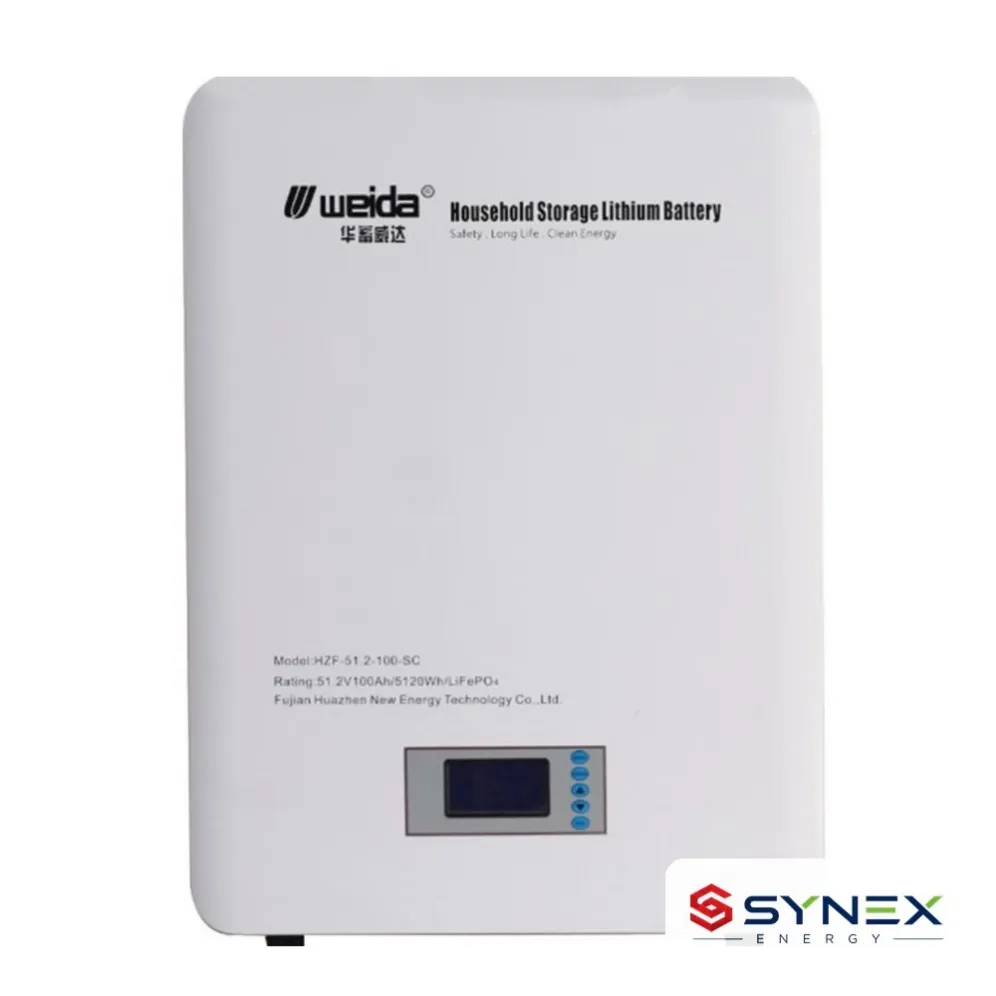
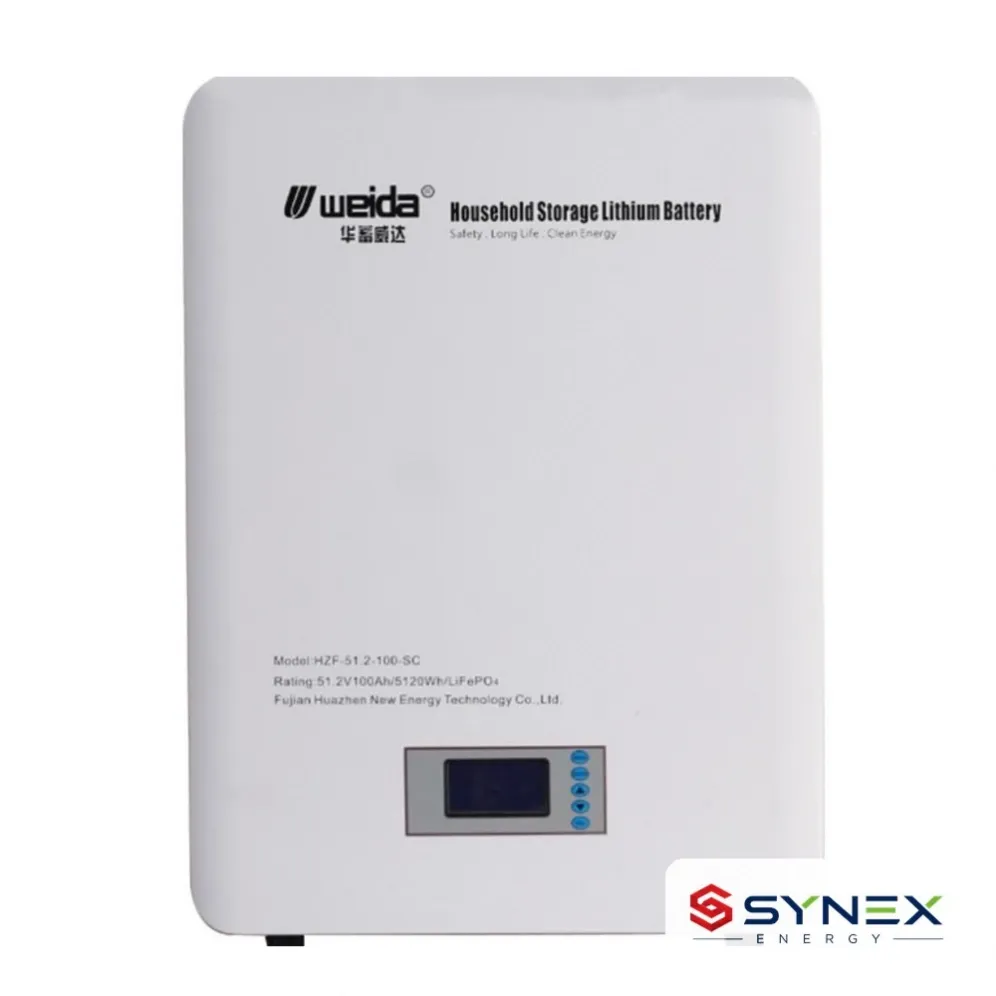
A wall-mounted battery hangs on the wall like a slim cabinet. The 5.12kWh Wall-Mounted Home Battery (model HZF-51.2-100-SC) is 51.2V, 100Ah, and weighs about 53kg. It has an LCD display so you can check its status at a glance, and it supports parallel expansion — you can add a second unit later if your needs grow. Product link: https://74a4c8syvc.web.allincms.com/products/5-12kwh-wall-mounted-home-battery
Choose wall-mounted when:
- Floor space is tight — a hallway, garage wall, or utility room.
- You want a clean look with nothing sitting on the floor.
- Your wall is solid enough to carry around 53kg plus its bracket.
- You need about 5kWh now, with the option to parallel a second unit later.
Watch out for: the wall itself. A plasterboard wall without proper reinforcement is not a safe mounting surface — your installer should confirm the wall can take the load. And once it is on the wall, moving it is a bigger job than rolling a stacked unit aside.
Stacked batteries: start small, grow module by module
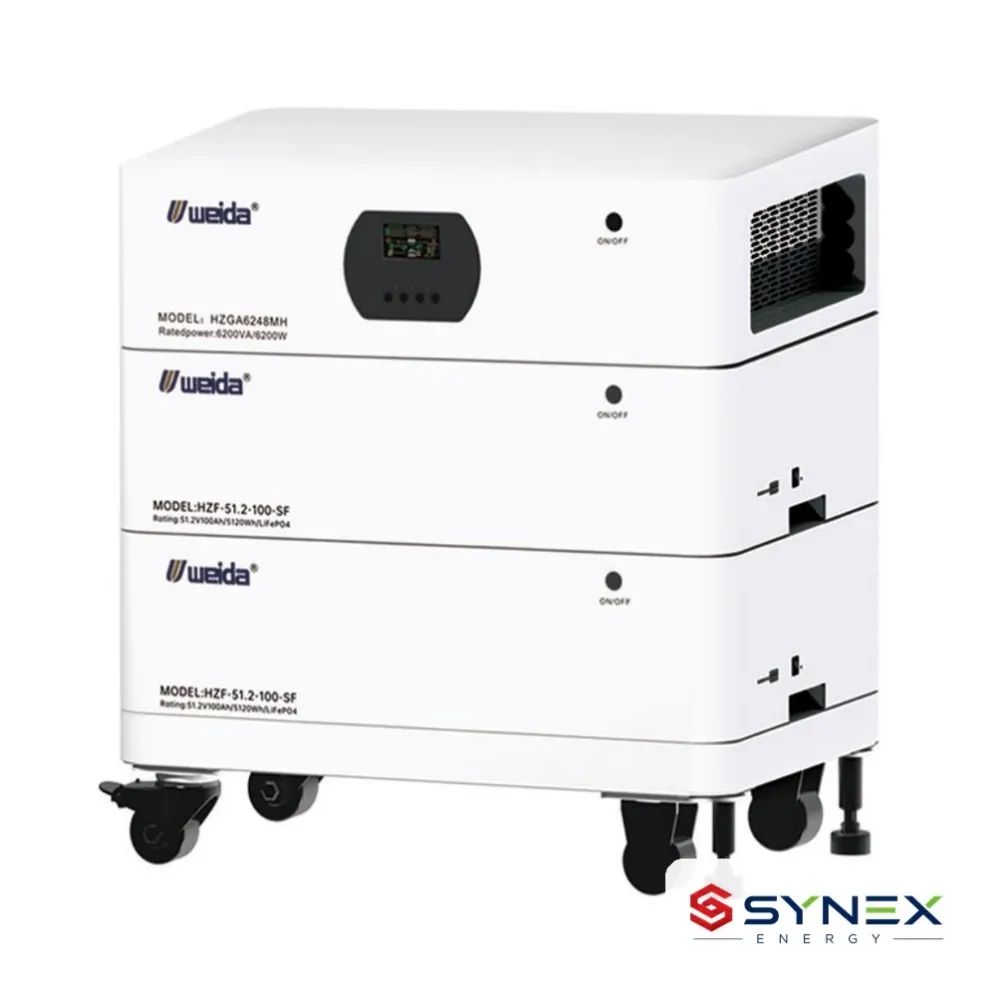
A stacked battery sits on the floor in a tower of modules, usually on wheels. The 5.12kWh Stacked Home Battery (model HZF-51.2-100-SF) is 51.2V, 100Ah, 5.12kWh per module, with a cycle life of 5000 cycles. Each module is added on top of the last, so capacity grows in 5.12kWh steps. Product link: https://74a4c8syvc.web.allincms.com/products/5-12kwh-stacked-home-battery
Choose stacked when:
- You want to start with 5kWh and add capacity later as your budget or your solar system grows.
- You prefer floor placement and the freedom to move the unit — the wheeled base helps.
- You may one day need a larger home system: the same stacked idea scales up to the 10kW / 14.7–22kWh High-Voltage Stacked Home System, a three-phase system with 98.2% efficiency. Product link: https://74a4c8syvc.web.allincms.com/products/10kw-14-7-22kwh-high-voltage-stacked-home-system
Watch out for: floor space. A tower needs a clear footprint and enough height for the modules you plan to add. Measure the space with the full stack in mind, not just the first module.
Rack-mount batteries: the standard for bigger systems
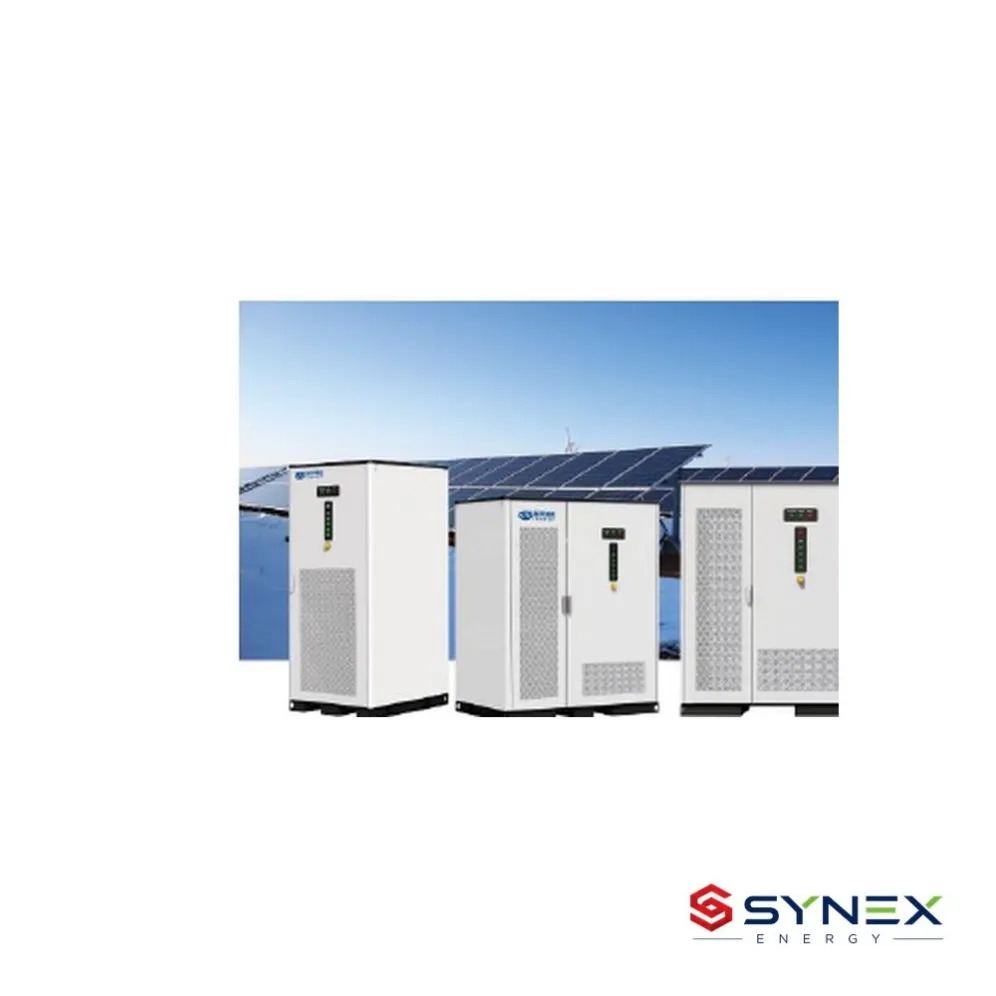
A rack-mount battery slides into a standard 19-inch rack — the same kind of rack used for servers and network equipment. The 5–16kWh Rack-Mount Home Battery, 19-inch is configurable from 5kWh to 16kWh at 51.2V, and up to 15 units can run in parallel. Product link: https://74a4c8syvc.web.allincms.com/products/5-16kwh-rack-mount-home-battery-19-inch
Choose rack-mount when:
- You already have a 19-inch rack, a plant room, or a dedicated energy cabinet.
- You are planning a larger system and want the most flexible way to scale.
- A professional installer is handling the setup — rack systems are the installer's familiar format.
- You want a tidy, serviceable layout where any single module can be swapped.
Watch out for: you need the rack itself, and the rack needs ventilation and access. For a single 5kWh battery in a small home, a rack is usually more hardware than the job needs.
How to decide in five questions
- Where will it live? A solid wall and no floor space points to wall-mounted. A garage corner with room to grow points to stacked. A rack room points to rack-mount.
- How much storage do you need now — and later? Around 5kWh suits any of the three. If you expect to grow past 10kWh, stacked or rack-mount makes expansion easier. (If you are unsure how much you need, see our sizing guide: https://74a4c8syvc.web.allincms.com/posts/how-much-energy-storage-do-i-need-home-vs-commercial-sizing-guide)
- Who is installing it? Wall-mounted and stacked units are the simplest for a first home system. Rack-mount suits homes where an installer is already building a larger setup.
- Do you need three-phase power? Most homes run on single-phase and any of the three formats works. For a larger three-phase home, look at the high-voltage stacked system.
- What is your budget path? Stacked batteries let you buy one module now and add more later, which spreads the cost over time.
A note on safety and standards
All three formats in the Synex range use LiFePO4 cells, the chemistry most home-storage makers choose for its thermal stability and long cycle life. Cycle-life figures are only comparable when the test condition is the same — always ask for the condition behind the number. For certification documents, availability is on request: ask us and we will confirm what is available for your market before you order. If you want the background, our guide to LiFePO4 cycles, safety and what to ask your supplier explains the questions that matter: https://74a4c8syvc.web.allincms.com/posts/lifepo4-battery-storage-cycles-safety-and-what-to-ask-your-supplier
FAQ
Can I mix wall-mounted, stacked and rack-mount batteries in one system?
In practice, no — stick to one format and one battery family per system, so the battery management systems and voltages match. If you need more capacity, expand within the same format.
Can I add capacity to a wall-mounted battery later?
Yes. The wall-mounted HZF-51.2-100-SC supports parallel expansion, so a second unit can be added alongside the first. Check with your installer that your inverter and cabling suit the larger total.
How many stacked modules can I add?
Capacity grows module by module in 5.12kWh steps. The practical limit depends on your inverter and your home's needs — for larger three-phase homes, the high-voltage stacked system (14.7–22kWh) is the next step up.
Is a rack-mount battery only for businesses?
No. Rack-mount is a format, not a market. It suits homes with a rack room or a larger planned system just as well as small commercial sites — but for a single 5kWh home battery it is usually more than you need.
Which format lasts longest?
Format does not decide lifetime — chemistry, cycle count and how the battery is used do. The stacked HZF-51.2-100-SF is rated at 5000 cycles; always compare cycle life with the test condition stated.
Get a Quote
Tell us where the battery will live, how much storage you need, and whether you already have solar or an inverter — we will recommend the format and the size that fits your home. Get a Quote / Contact Us: https://74a4c8syvc.web.allincms.com/contact-us