How Much Energy Storage Do I Need? Home vs Commercial Sizing Guide
Most homes need 5–15kWh of storage; a small commercial site needs 100–215kWh. This guide shows how to size a system from your daily use, your backup loads and your solar output.
Most homes need 5–15kWh of energy storage. A small commercial site needs 100–215kWh, and larger sites need container systems of 500kWh or more. The right size comes down to three things: how much energy you use each day, which loads must keep running during an outage, and how much solar you want to store for later. Get those three right and the rest of the decision is easy.
Start with your daily use
Your electricity bill shows how much energy you use in a month. Divide that number by 30 and you have your average daily use in kilowatt-hours (kWh). Many households use somewhere around 10–30kWh a day, but the spread is wide: a small flat may use far less, while a large house with air conditioning and electric cooking may use far more. Your own bill is the only number that matters for sizing.
A quick way to estimate
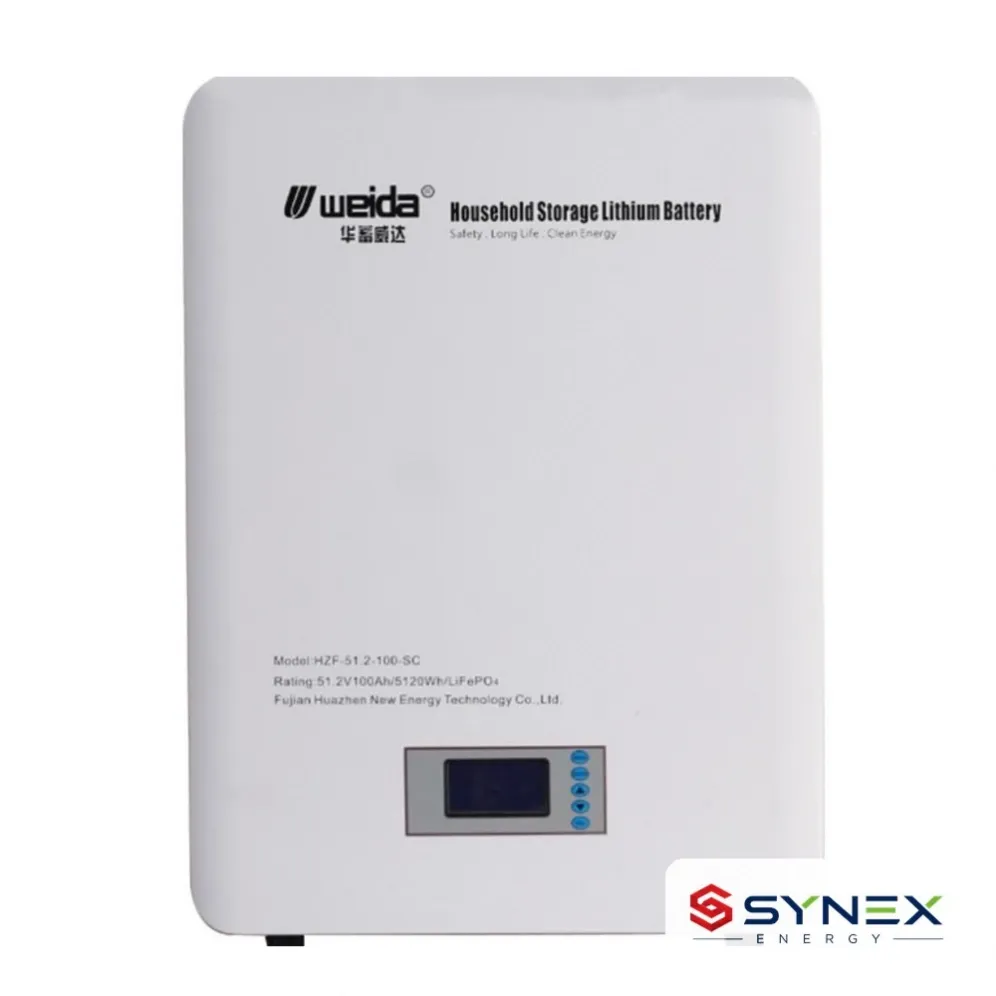
Look at your evening use, not your whole day. Solar panels cover the daytime; the battery is there for the evening and night, when the sun is down and the lights, cooking, television and washing machine are running. Add up the loads you run after dark and how long each one runs, and you have a first estimate of the storage you need. If that estimate comes to around 5kWh, a single 5.12kWh wall-mounted home battery is a good starting point; if it comes to 10kWh or more, look at larger systems.
Home sizing: 5kWh, 10kWh or more
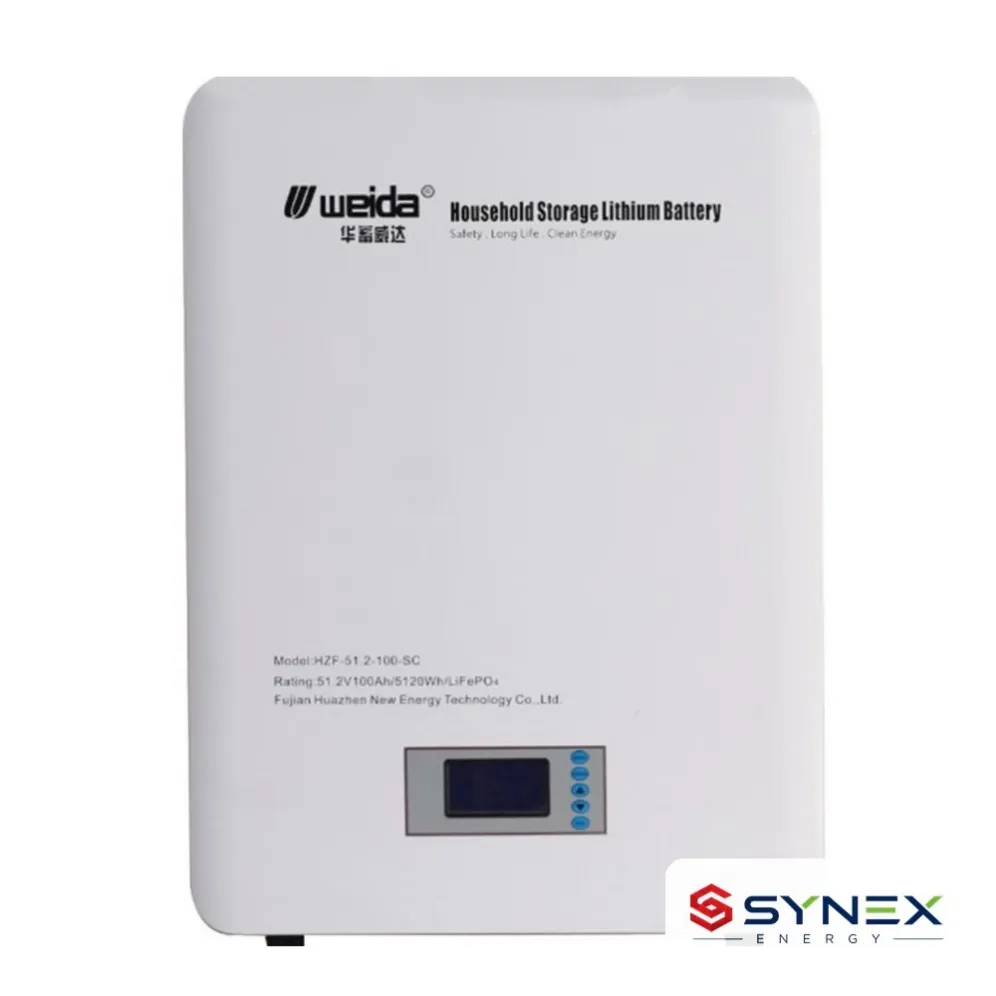
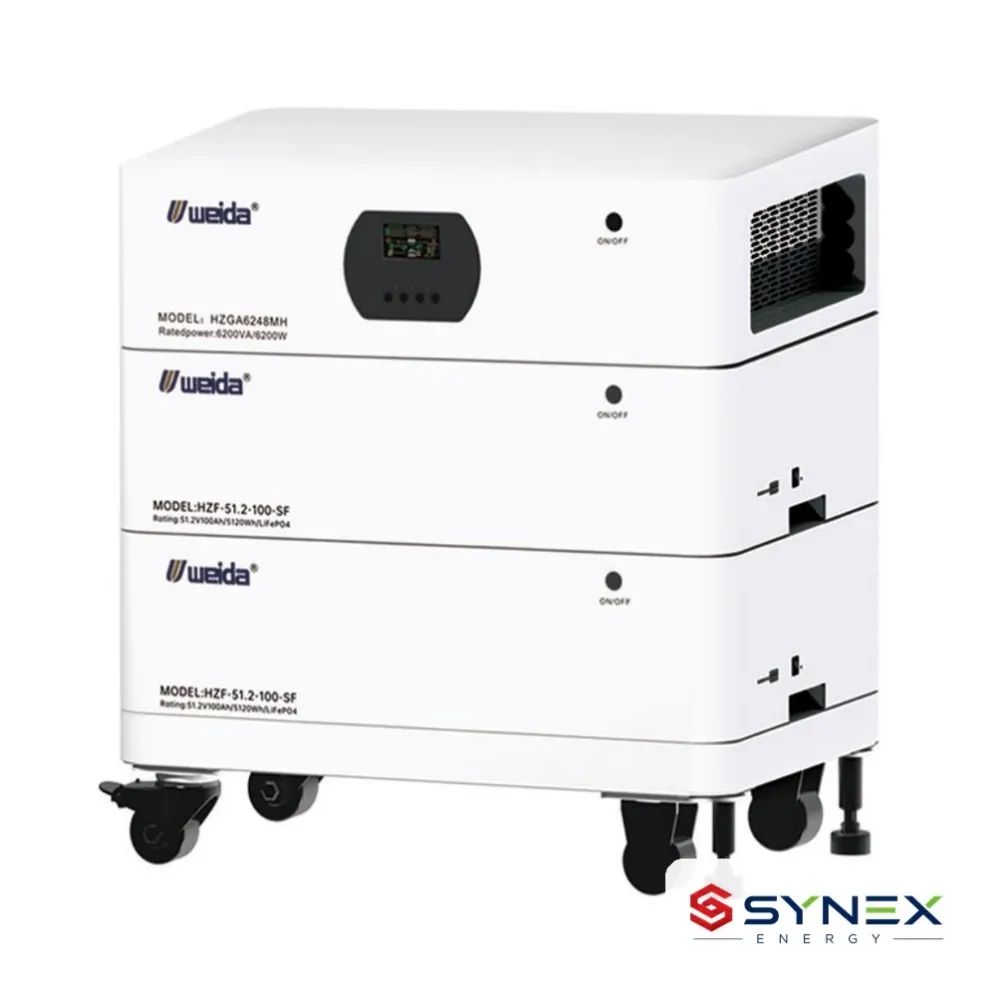
For a small household, 5.12kWh covers evening essentials: lighting, a fridge, Wi-Fi, phone charging and a television. The 5.12kWh wall-mounted home battery is a slim unit that hangs on the wall, while the 5.12kWh stacked home battery stacks on wheels and can grow by adding modules. Both have a 51.2V, 100Ah LiFePO4 battery inside.
For a larger household, or a home with an air conditioner or an electric water heater, 10kWh or more is the safer choice. The 10kW / 14.7–22kWh high-voltage stacked home system stacks to 22kWh, and the Synex Home All-in-One 6kW / 5–10kWh combines battery and inverter in one unit. The 5–16kWh rack-mount home battery fits a standard 19-inch rack and scales to 15 units in parallel. As a rule of thumb, size for your evening use, not your whole-day use: oversizing costs more than you need to spend, and undersizing means buying grid power at night.
Commercial sizing: 100kWh and up
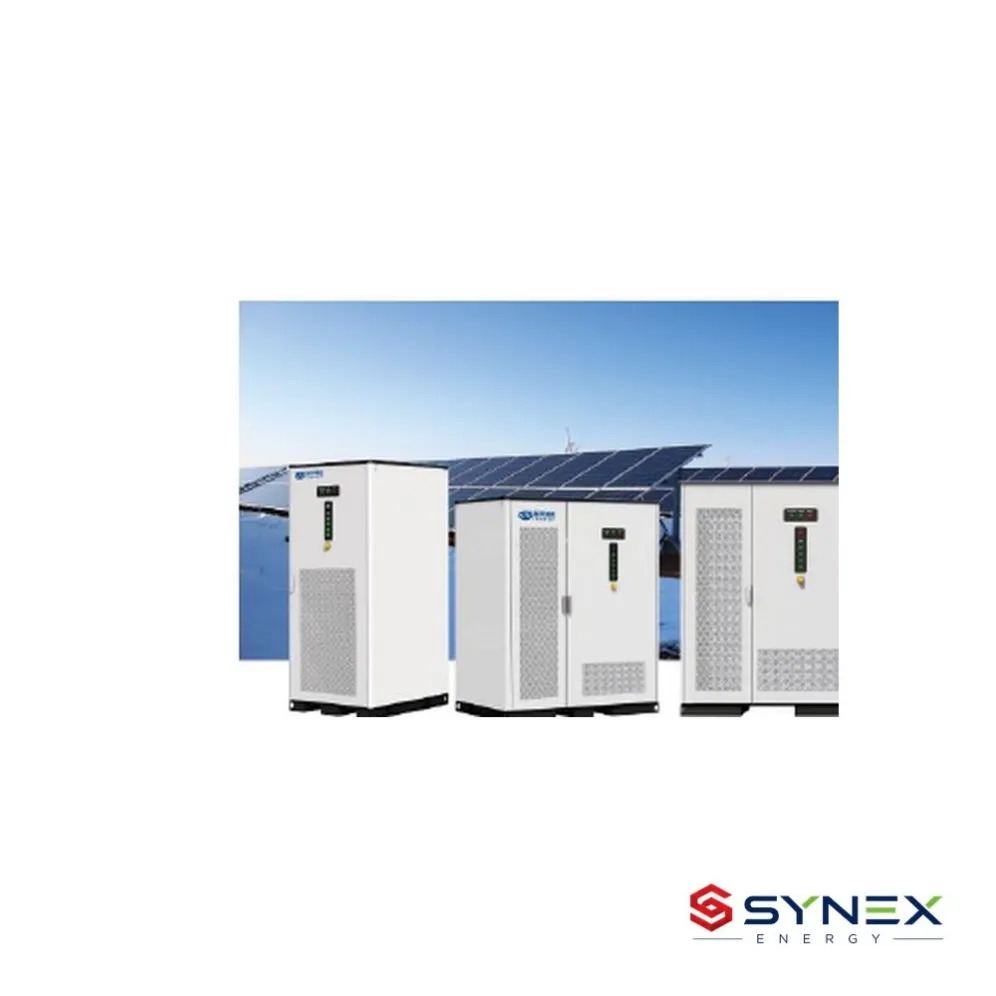
Commercial sites use far more energy than homes, and the numbers scale accordingly. A shop, office or small factory typically starts with an outdoor cabinet: the 20kW / 107.52kWh outdoor air-cooled cabinet or the 100kW / 215kWh outdoor storage cabinet. These cabinets store energy for peak shaving — discharging when grid power is expensive — and provide backup power, switching to off-grid operation in 20ms or less. For sites that work with solar and diesel generation, the 215kWh / 100kW liquid-cooled all-in-one cabinet switches over in under 10ms.
For larger projects, storage moves to container scale. Our Solutions page lists custom projects available on request, from a 500kW / 1075kWh container and a 1MW / 2MWh container up to grid-scale systems of 10–50MWh. These are sized and quoted for each site — there is no standard price, because the configuration depends on the loads, the solar array and the grid connection.
What about solar?
If you have solar panels, size the battery to your evening load and to the solar you would otherwise export. A battery that is too small leaves solar unused; a battery that is too large sits half-empty. A hybrid inverter ties the panels, the battery and the grid together — for example the 5.5–11kW high-frequency hybrid inverter or the 6–12kW hybrid inverter, IP65. Check how much solar your system exports on a sunny day: that is the energy a battery can capture for the evening.
Common sizing mistakes
- Sizing by nameplate only: a system rated 10kW is not the same as one storing 10kWh. Power (kW) is how fast it can deliver energy; capacity (kWh) is how much it holds.
- Confusing kW and kWh: a 5kWh battery can run a 1kW load for about five hours, but only a 5kW load for about one hour.
- Leaving no room to expand: choose a system that can grow — stacked and rack-mount batteries add capacity as your needs grow.
- Forgetting backup loads: decide in advance which loads the battery must keep running in an outage, and size for those.
Frequently asked questions
Can I start small and add capacity later?
Yes. Stacked and rack-mount home batteries are modular: start with 5.12kWh and add modules, or add rack units in parallel (up to 15). Just check that any new module matches the model and voltage of the system you already have.
How long will a 5kWh battery power my home?
It depends on what is running. 5kWh powers a 500W evening load for about ten hours, or a 2kW load for about two and a half hours. Work from your own loads, not from the nameplate.
Do I need an inverter as well?
Yes, unless you buy an all-in-one unit. A hybrid inverter converts between the DC battery and your AC loads and manages solar, grid and backup. All-in-one systems such as the Synex Home All-in-One include the inverter in the same unit.
How do I get an exact size for my site?
Send us your electricity bill and a list of the loads you want to back up, and we will size the system for you. Pricing and availability depend on configuration, quantity and destination — certification is available on request.
Get a quote
Tell us about your home or site and we will help you choose the right size. Contact us or open the Get a Quote dialog in the header, and we will follow up with next steps.